Temperature sensors
Thermocouple vs RTD (PT100): Which One Fits Your Process?
How thermocouples and PT100 RTDs compare on principle, range, accuracy, durability and cost — and a simple way to choose the right sensor for your plant.
ARSO Temp Equipment 2 min read
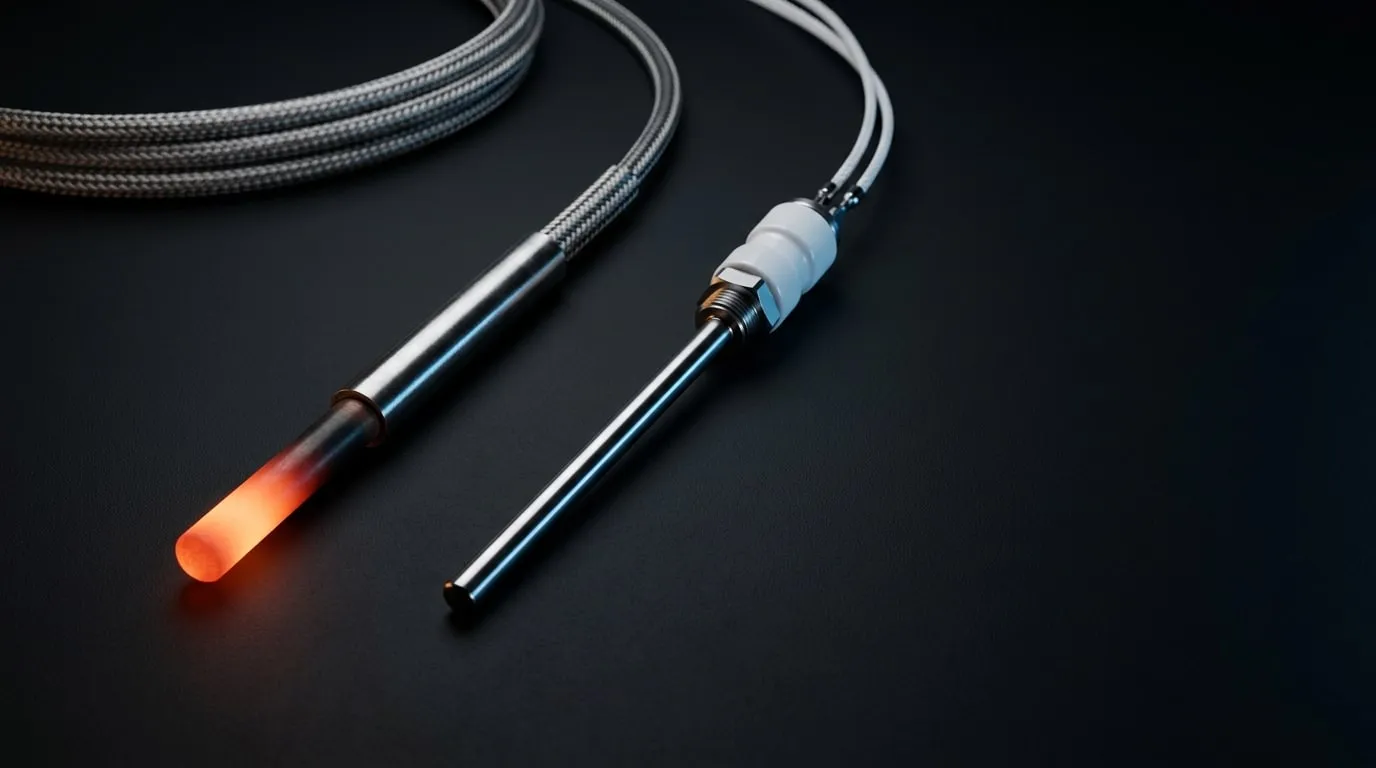
When a temperature sensor needs replacing, the first question is usually thermocouple or RTD (PT100)? Both measure temperature, but they work differently and have very different strengths. The wrong choice means inaccurate readings, short sensor life, or paying more than you need to.
How they work
A thermocouple joins two dissimilar metals at the tip (the hot junction). A temperature difference between the tip and the connection end produces a small millivolt signal (the Seebeck effect), which the instrument converts into temperature.
An RTD (Resistance Temperature Detector) relies on the fact that a metal’s resistance changes with temperature. The most common is the PT100: platinum with 100 Ω at 0 °C, rising by about 0.385 Ω per degree.
Side by side
| Thermocouple | RTD (PT100) | |
|---|---|---|
| Range | Very wide, from below zero to over 1,200 °C (Types R/S/B go higher) | Typically about -200 to 600 °C |
| Accuracy | Moderate — e.g. Type K Class 2 about ±2.5 °C | High — e.g. Class A about ±0.15 °C at 0 °C |
| Long-term stability | Can drift with long use at high temperature | Very stable |
| Response | Fast, especially in small sheaths | Slightly slower |
| Vibration | Tolerates it well | Needs a suitable construction |
| Cost | Lower | Higher |
Choose a thermocouple when…
- the process runs above 500–600 °C — furnaces, heat-treatment ovens, boilers, flues;
- you need a fast response or a very thin sheath — moulds, injection nozzles;
- the mounting point vibrates;
- you need many sensors on a tight budget.
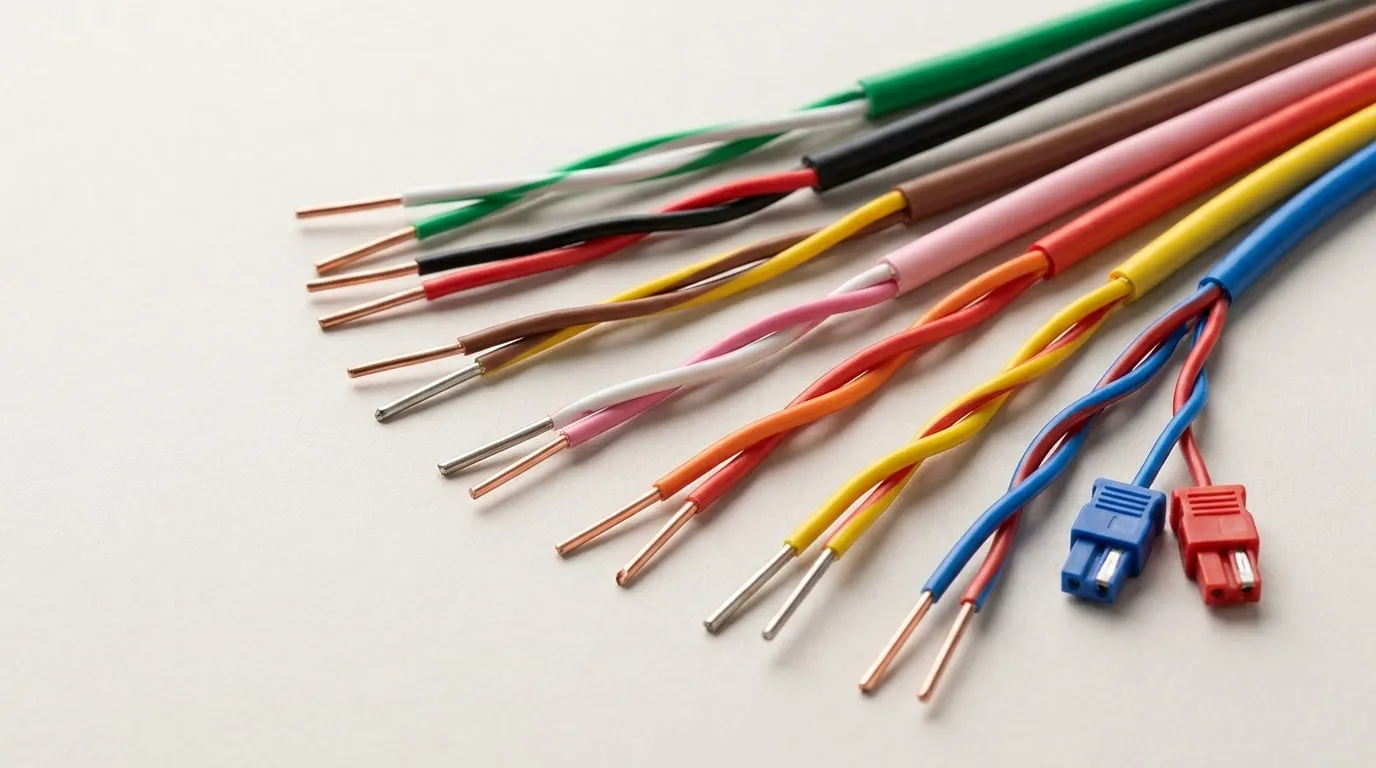
Remember that thermocouples must be wired with compensating cable of the same type, and the instrument must apply cold-junction compensation. Ordinary copper wire will skew the reading.
Choose a PT100 when…
- accuracy and stability matter — food and beverage, pasteurisation, pharma, cold rooms;
- the point is a critical control point that is calibrated regularly;
- temperatures are moderate.
Industry usually uses 3-wire PT100s, which cancel out lead resistance. For long runs or the best accuracy, use 4-wire, or fit a 4–20 mA transmitter in the sensor head and send the signal to your PLC.
Quick rules
- Above 600 °C → thermocouple
- High accuracy at moderate temperature → PT100
- Fast response or vibration → thermocouple
- Long cable runs or PLC input → add a transmitter
Not sure? Send a photo of the installation, the old sensor and the operating range to ARSO on LINE. We’ll help you choose and build the sensor to size — from a single piece.
Ranges and tolerances above are approximate values from international standards (IEC 60584 for thermocouples, IEC 60751 for PT100). Real limits depend on sheath material, size and operating conditions.