Heaters
Choosing an Industrial Heater: Type, Wattage and Why Heaters Burn Out
Immersion, cartridge, band and finned heaters explained, with a simple wattage calculation, watt density guidance and the common causes of early heater failure.
ARSO Temp Equipment 2 min read
A heater that “isn’t hot enough” or “keeps burning out” is rarely just a quality problem. Usually the type, wattage or watt density doesn’t suit the job. Here’s what to check before ordering a custom heater.
Four heater types found in most plants
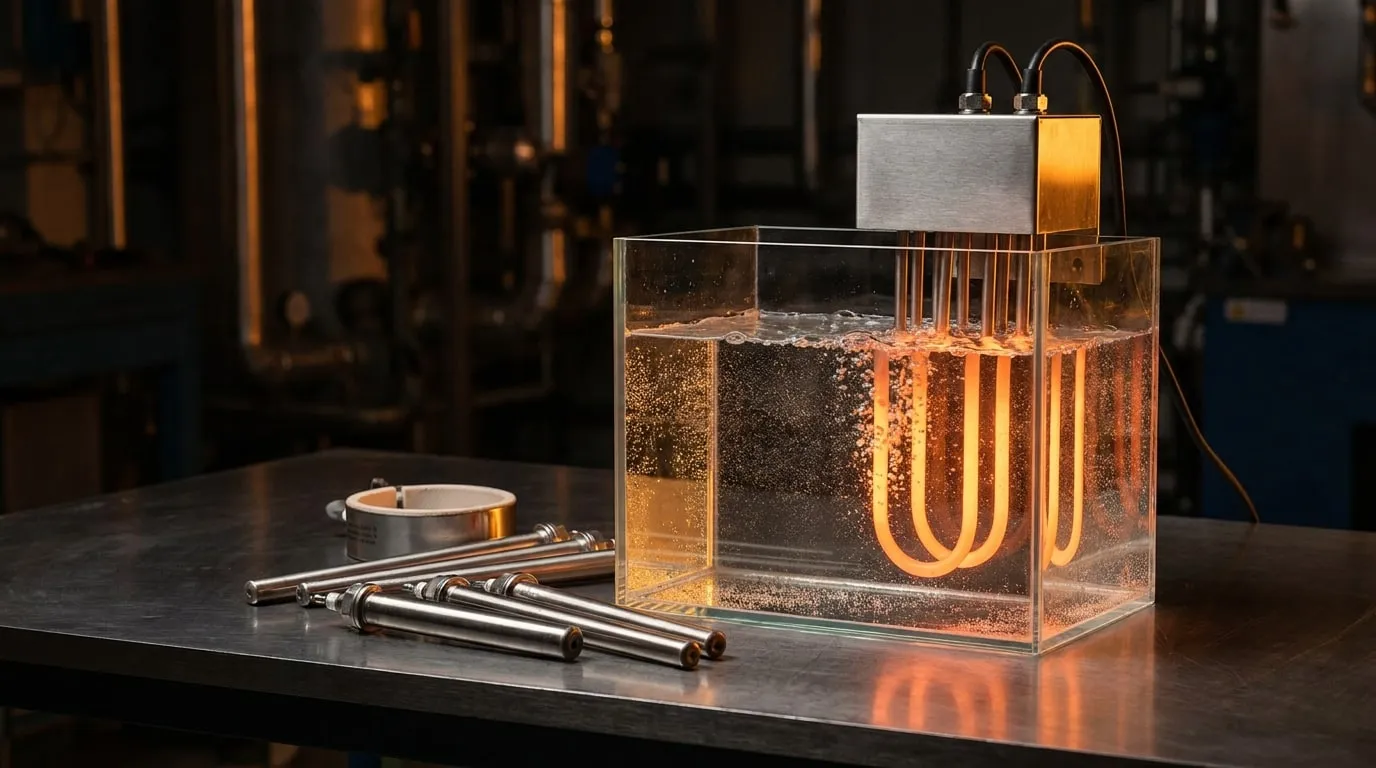
Immersion heaters — U-shaped tubular elements on a flange or screw plug, for heating water, oil or chemicals in tanks.
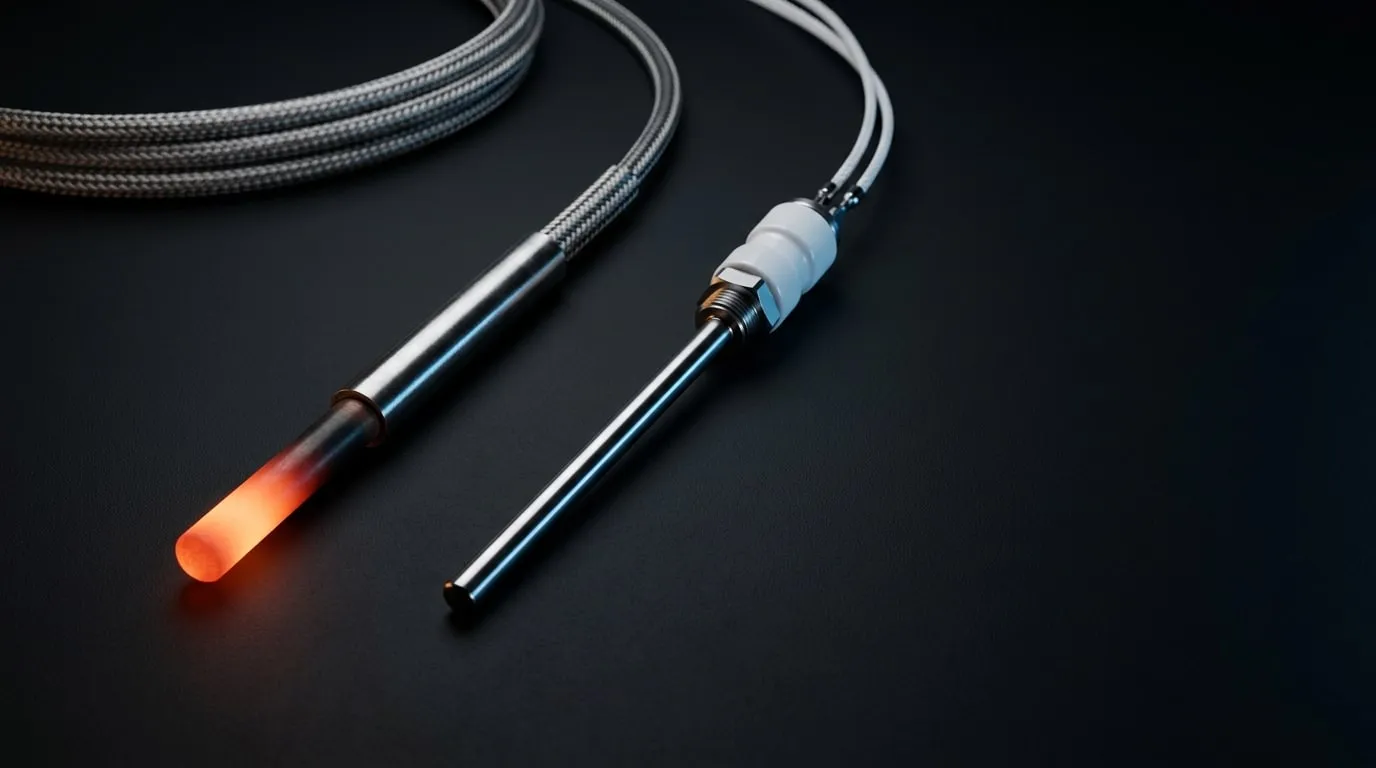
Cartridge heaters — small rods inserted into holes in moulds or metal blocks, delivering concentrated local heat. The hole must be a close fit; an air gap traps heat and the heater fails early.
Band heaters — clamp around the barrel of injection moulding and extrusion machines, in mica or higher-temperature ceramic versions.
Finned heaters — tubular elements with fins to shed heat into air, for hot-air systems, ovens and drying tunnels.
A simple wattage calculation
The power needed to raise a liquid’s temperature is:
Power (kW) = mass (kg) × specific heat (kJ/kg·°C) × temperature rise (°C) ÷ time (s)
Example: heat 100 litres of water (about 100 kg) from 25 °C to 75 °C in one hour.
- Energy = 100 × 4.186 × 50 = 20,930 kJ
- Power = 20,930 ÷ 3,600 ≈ 5.8 kW
- Allow about 20% for heat lost from the tank and pipes → choose about 7 kW
An uninsulated tank, a faster heat-up or a continuous inflow of cold liquid all need more margin.
Watt density — the overlooked cause of failures
Watt density is the wattage per unit of heater surface area. Too high for the medium and the heater surface overheats.
- Water tolerates relatively high watt density.
- Oil needs much lower watt density, otherwise it cokes onto the sheath, insulates it and the element overheats and fails.
- Chemicals need both the right watt density and a corrosion-resistant sheath.
The fix is longer or more elements, spreading the same wattage over more surface.
Match the voltage
Heater power changes with the square of the voltage. A heater designed for 380 V delivers only about one-third of its power on 220 V; run it above its design voltage and it overheats and fails early.
Control it well and it lasts longer
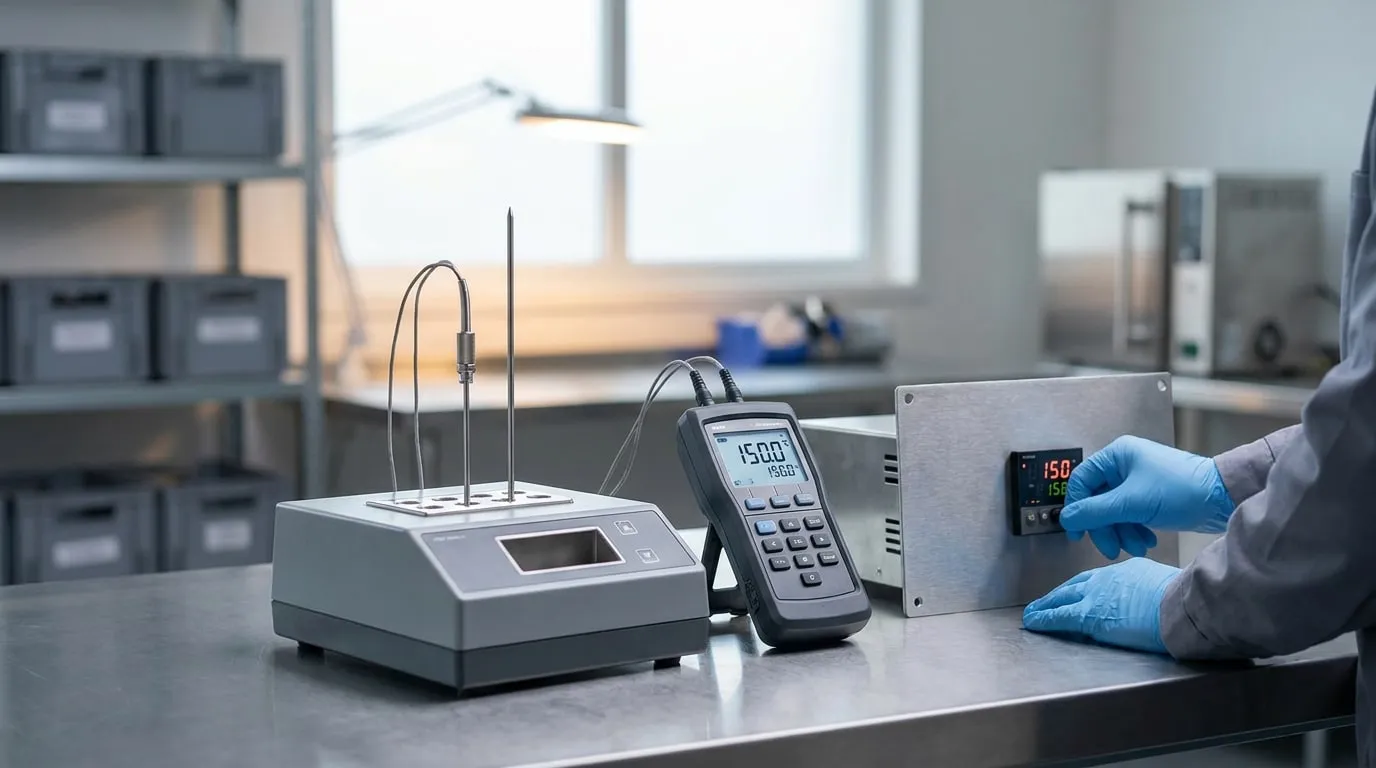
A good system uses a thermocouple or PT100 feeding a PID temperature controller, switching the load through a solid state relay. An SSR switches faster and more quietly than a contactor, holding temperature steady and sparing the heater from repeated overshoot. Tanks that could run dry should also have over-temperature protection or a level switch.
Ordering a heater from ARSO
Send the size, wattage, voltage and a photo of the old part (if any) on LINE. We’ll check the wattage and watt density suit the job before we build the heater to size.