Calibration
Why Calibrate Temperature Instruments, and How Often?
Why sensor and controller calibration matters in a plant, how comparison calibration works, sensible intervals, and the warning signs that a check is due now.
ARSO Temp Equipment 2 min read
The controller says 180 °C, but inside the oven it might really be 172 °C — or 190 °C — and without a check you’d never know. Every sensor ages and drifts over time, especially at high temperature, under vibration or with frequent wash-downs. Calibration is how you find out how far the reading is from the truth.
Why calibration matters
- Product quality — a few degrees off can leave food undercooked, plastic parts incompletely formed or heat-treated parts out of spec.
- Food safety — critical control points such as pasteurisation must prove the temperature was actually reached.
- Audits — ISO 9001, GMP and HACCP all expect instruments used for quality decisions to be calibrated, with records kept.
- Energy — a sensor that reads low makes the system overheat all the time.
How it’s done
Plant temperature calibration is usually done by comparison:
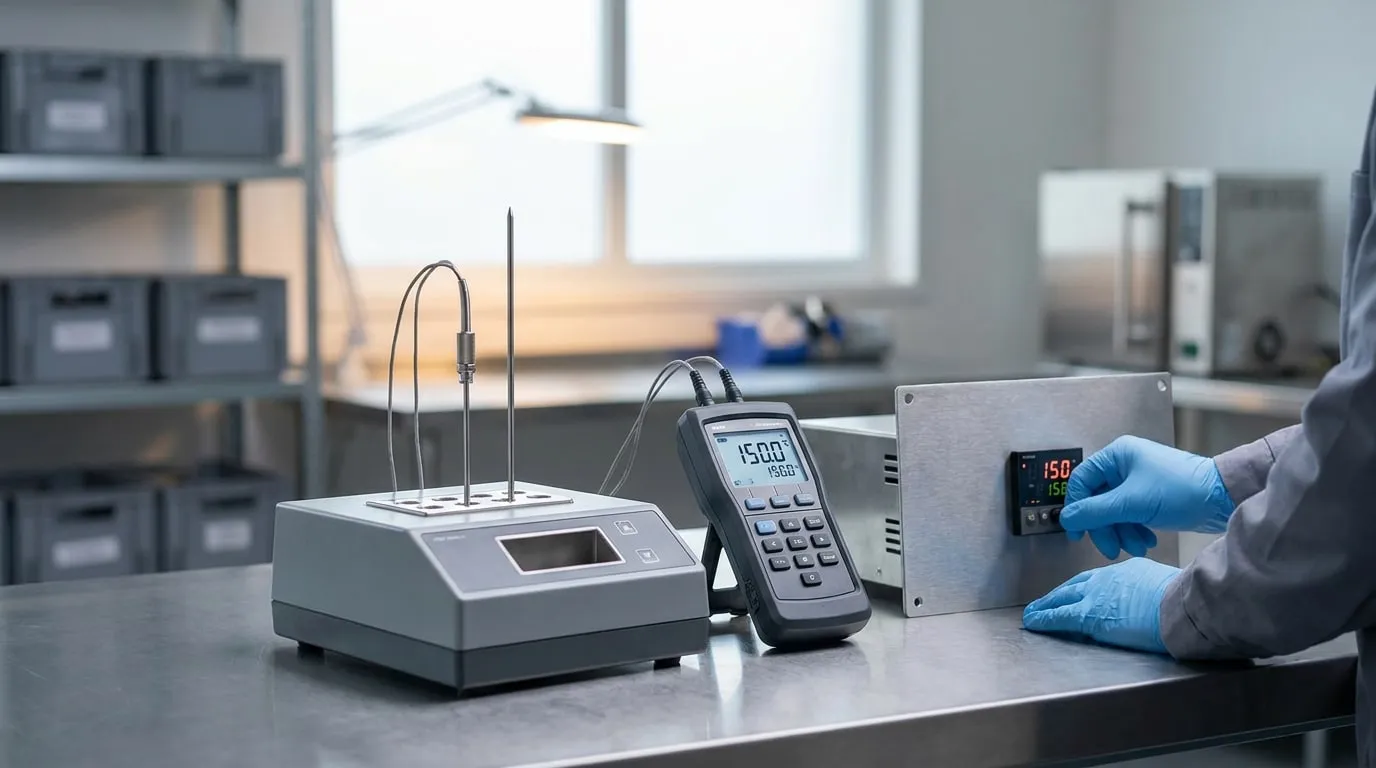
- Place the sensor under test in a stable, controllable heat source such as a dry-block calibrator or oil bath.
- Place a more accurate, certified reference thermometer alongside it.
- Compare readings at no fewer than three points across the working range — low, middle and high.
- Record the error, then apply an offset at the controller where possible, or replace the sensor if it is out of tolerance.
It’s often worth doing a loop calibration — sensor, cable and controller together — because the error may come from the wrong compensating cable or a controller input setting, not the sensor itself.
How often?
There’s no single number for every plant. Common practice:
- Points that directly affect safety or quality — every six months, or more often if your quality system requires it.
- General points — once a year.
- Adjust based on calibration history: if readings stay stable over several checks, the interval can be extended; if they drift, shorten it or reconsider the sensor type.
Signs a check is due now
- Two sensors close together disagree noticeably.
- Product quality problems appear with unchanged settings.
- Temperature hunts up and down, or the display jumps.
- A sensor, cable or controller has just been replaced.
How ARSO can help
Our team checks and calibrates temperature instruments on site against reference equipment, adjusts controllers, and can replace worn sensors straight from stock, with a written report.
If your quality system requires certificates from an ISO/IEC 17025 accredited laboratory, tell us when you enquire so the calibration can be planned to meet that requirement.